
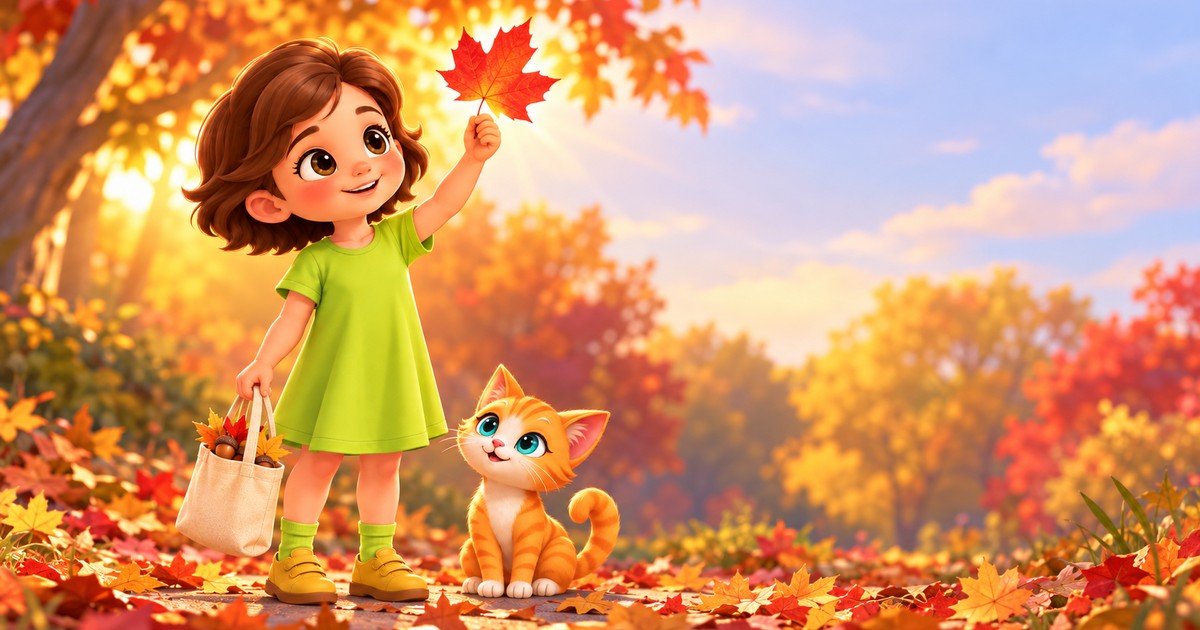
The best fall science activities for kids ages 5–8 don’t need a kit. A 20-minute walk is enough: collect leaves and ask why they changed color, hunt for seeds and figure out how they travel, and look for signs that animals are getting ready for winter. Each one is real biology a child can see with their own eyes.
Fall science activities for kids usually come packaged as kits and printables. But the best one might already be waiting outside your door.
Have you noticed how many questions a single walk in October produces? Why is that leaf red and this one yellow? Where did all the bugs go? Why is that squirrel so busy?
Those aren’t distractions from science. They are science, biology, specifically, happening in slow motion all around you. Here’s how to turn an ordinary fall walk into four small investigations, no equipment required.
Why do leaves change color in fall?
Try this: ask your kid to find five leaves, each a different color. Line them up at home, from green to red.
The biology: leaves are green because of chlorophyll, the pigment that helps a tree turn sunlight into food. As the days get shorter, the tree stops making chlorophyll. The green fades, and the yellows and oranges that were in the leaf all summer finally show through. The reds are different — many trees make those colors new, right at the end of the season.
The question to leave them with: if the yellow was hiding in that leaf all summer, what else might be hiding in plain sight?
How do seeds travel?
Fall is seed season, and seeds have a problem: plants can’t walk. So they borrow a ride.
Try this: go on a seed hunt. Maple “helicopters,” acorns, pinecones, the prickly burrs that stick to your socks. Drop a maple seed from shoulder height and watch it spin down slowly instead of falling straight.
The biology: some seeds ride the wind. Some hitch a ride on animal fur, or socks. Acorns get buried by squirrels, who forget a few of them. Those forgotten acorns are how new oak trees start.
Ask: if you were a seed, how would you want to travel? The answers are usually wonderful.
How are animals getting ready for winter?
Try this: become animal detectives. Look for squirrels carrying food, birds gathering in flocks, a neighbor’s dog with a fluffier coat than it had in July.
The biology: animals have different plans for the cold months. Some store food. Some travel somewhere warmer. Some grow thicker coats. Some slow down almost completely until spring.
None of them are told to do this. The shorter days are the signal, and kids find that genuinely amazing.
Where do insects go in the fall?
Try this: carefully lift a log or look under a pile of leaves. Count what you find, and compare it to what you’d have seen in summer.
The biology: many insects don’t make it through winter as adults. Instead, they leave eggs behind, or spend the winter tucked into bark and soil, waiting for spring. A few, like monarch butterflies, travel thousands of miles south.
Ask: where would you hide for the winter if you were a bug?
How to make fall science activities for kids actually stick
Bring a bag, not a worksheet. Let them collect, then sort at home by color, size, or shape. Sorting is how scientists start classifying the living world.
Visit the same tree every week. Take a photo or draw it. Watching one thing change over time is the heart of biology, and it turns a single walk into a whole season of observation.
You don’t need the answers. “I’m not sure, let’s find out” does more work than a perfect explanation. Kids ages 5–8 aren’t looking for a lecture. They’re checking whether their curiosity is welcome.
A book for the walks in between
Biology Made Simple for Kids: Exploring Life, Plants, and Animals, published by Curious Lab Press, is an illustrated paperback that introduces children ages 5–8 to what makes something alive, including plants, seeds, and animals, through the story of a curious girl named Sarah. It’s available on Amazon.
It pairs naturally with fall walks: the questions your kid brings home are the same ones the book explores. See the paperback on Amazon
Frequently asked questions
What are easy fall science activities for kids ages 5–8?
Collecting and sorting leaves by color, hunting for seeds and testing how they travel, spotting signs that animals are preparing for winter, and looking for where insects hide. All of them work on a short walk, with no materials.
How do I explain why leaves change color to a young child?
Tell them leaves are green because of a pigment that helps the tree make food from sunlight. In fall the tree stops making it, and the yellow and orange that were there all along start to show.
Do fall science activities need special materials?
No. A bag for collecting and a curious question are enough. A magnifying glass is a nice extra, not a requirement.
Are nature walks really science?
Yes. Observing, comparing, and asking why are the core skills of science. For kids ages 5–8, a walk is one of the best places to practice them.
Curious Lab Press is an independent children’s science publisher. We make books that help kids ages 5–8 stay curious about the world. Learn more about who we are.
Want more ideas like this? Join News Lab, our free newsletter for curious families.