
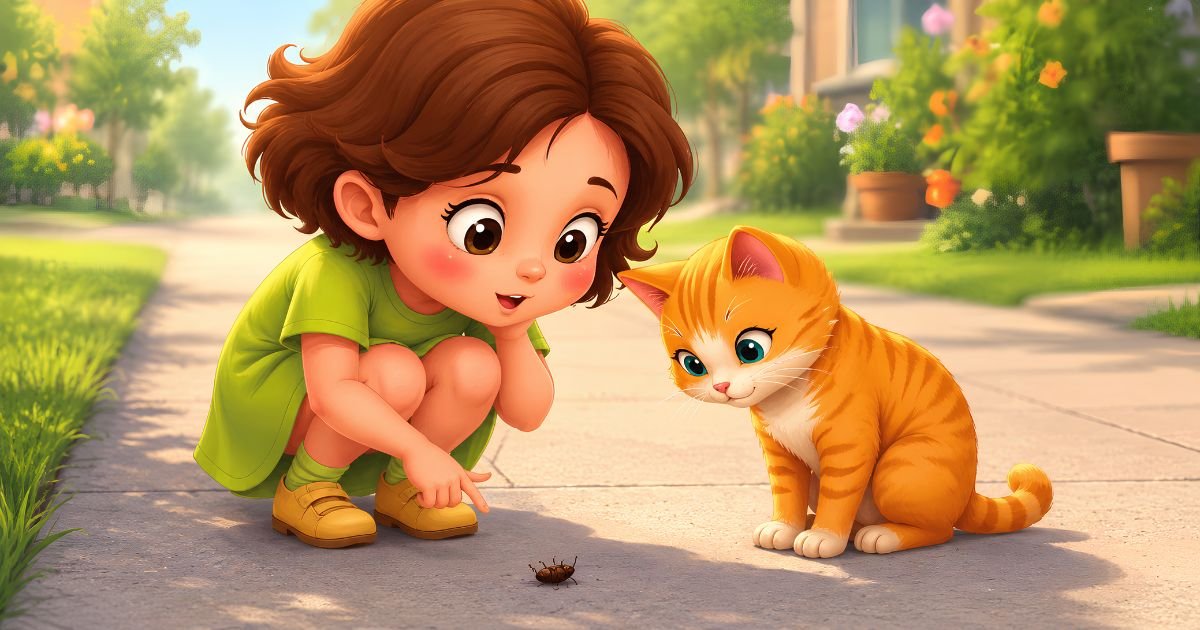
One of the best ways to start teaching biology for kids is with a question they actually ask.
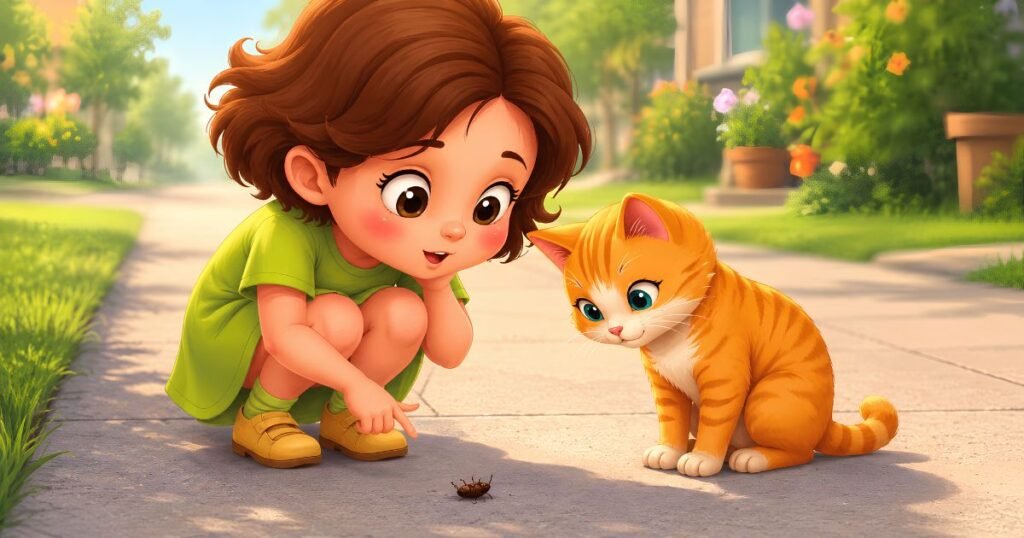
Your kid just pointed at a dead bug on the sidewalk and asked, “Dad, why did it stop moving?”
You opened your mouth. Nothing came out.
Not because you don’t know what death is. But because “how do I explain the biology of death to a six-year-old” is not a question you were ready for on a Tuesday morning.
Here’s the thing: that question—exactly that kind of question—is the starting point for biology. And you don’t need a science degree to follow it somewhere good.
Biology is already happening in your house
Most parents assume teaching biology means lessons. Diagrams. Vocabulary words.
It doesn’t.
Biology is the science of living things, and living things are everywhere. The plant on your windowsill that keeps growing toward the light. The bread that went moldy in the back of the pantry. The dog that gets sleepy after eating. Your kid’s scraped knee that somehow healed on its own.
When you start pointing at those moments and saying “hey, something interesting is happening here”—that’s biology for kids. No worksheet required.
And kids ages 5–8 are actually at the perfect age for this. They’re still asking “why” about everything. That window doesn’t stay open forever.
Why biology is the best entry point into science
Of all the science topics you could start with, biology might be the most natural fit for young kids.
Chemistry involves things you can’t always see. Physics can feel abstract. But biology? Biology is personal. It’s their body, their pet, the ant carrying something three times its size across the kitchen floor.
There’s also something emotionally satisfying about biology at this age. When a five-year-old learns that plants breathe—that they’re alive in a real way, not just decorative—something clicks. The world gets a little more interesting.
That’s the feeling you’re going for. Not “I learned a fact.” More like, “I didn’t know the world worked like that.”
What actually works at home
You don’t need to plan science activities. You just need to slow down at the right moments. A few things that tend to work:
Let them observe before you explain
Next time you’re at a park or in the backyard, ask your kid to find three things that are alive and three that aren’t. Don’t give hints. See what they pick.
Then ask: how do you know?
That question—”how do you know?”—is one of the most powerful things you can say to a curious kid. It invites them to think instead of just receive.
Make the kitchen a biology lab
Why does bread rise? Why does fruit go brown after you cut it? Why does the egg change when it hits the hot pan?
These are real biology questions. You don’t need to use technical words—but you can follow the curiosity wherever it leads.
Even just saying “I don’t know, let’s figure it out” teaches something more important than any specific fact: it shows that not knowing is the beginning of learning, not the end.
Use their body as the example
Kids are endlessly curious about themselves. Why do I get hungry? Why does my heart beat faster when I run? What’s inside a blister?
These questions are pure biology—and they’re easy to engage with because the subject is right there. No setup needed.
You don’t have to answer everything perfectly. Following the question together is the point.
Read about it, but not like school
There’s a difference between a science textbook and a science book for kids that actually works. The first one explains. The second one invites.
Good nonfiction books for kids ages 5–8 don’t front-load definitions. They start with something the kid already wonders about, and then take them somewhere surprising. The illustrations carry a lot of the weight. The language stays human.
When kids read books like that, they don’t feel like they’re studying. They feel like they’re in on something.
A note on not having all the answers
One thing parents worry about when it comes to science: “What if I get it wrong?”
Here’s the truth: your kids don’t need you to be an expert. They need you to be curious alongside them. There’s a big difference.
When you say “I don’t actually know why leaves change color—do you want to find out?” you’re modeling something kids rarely see: an adult who’s still learning. That normalizes curiosity in a really powerful way.
The goal isn’t to raise a future biologist (although, why not). The goal is to raise a kid who asks questions and knows that asking is good.
Where to start
If you’re looking for a good starting point—something you can read together that introduces biology in a way that feels like a conversation rather than a lesson—Biology Made Simple for Kids is designed exactly for that. It covers living things, plants, and animals for kids ages 5–8, with illustrations that do the heavy lifting and language that doesn’t talk down to anyone.
No tests at the end. No memorization required. Just a good question and somewhere interesting to follow it.
That’s really all biology needs to be, at this age.
Biology Made Simple for Kids is published by Curious Lab Press, an independent children’s science publisher. Learn more about who we are.